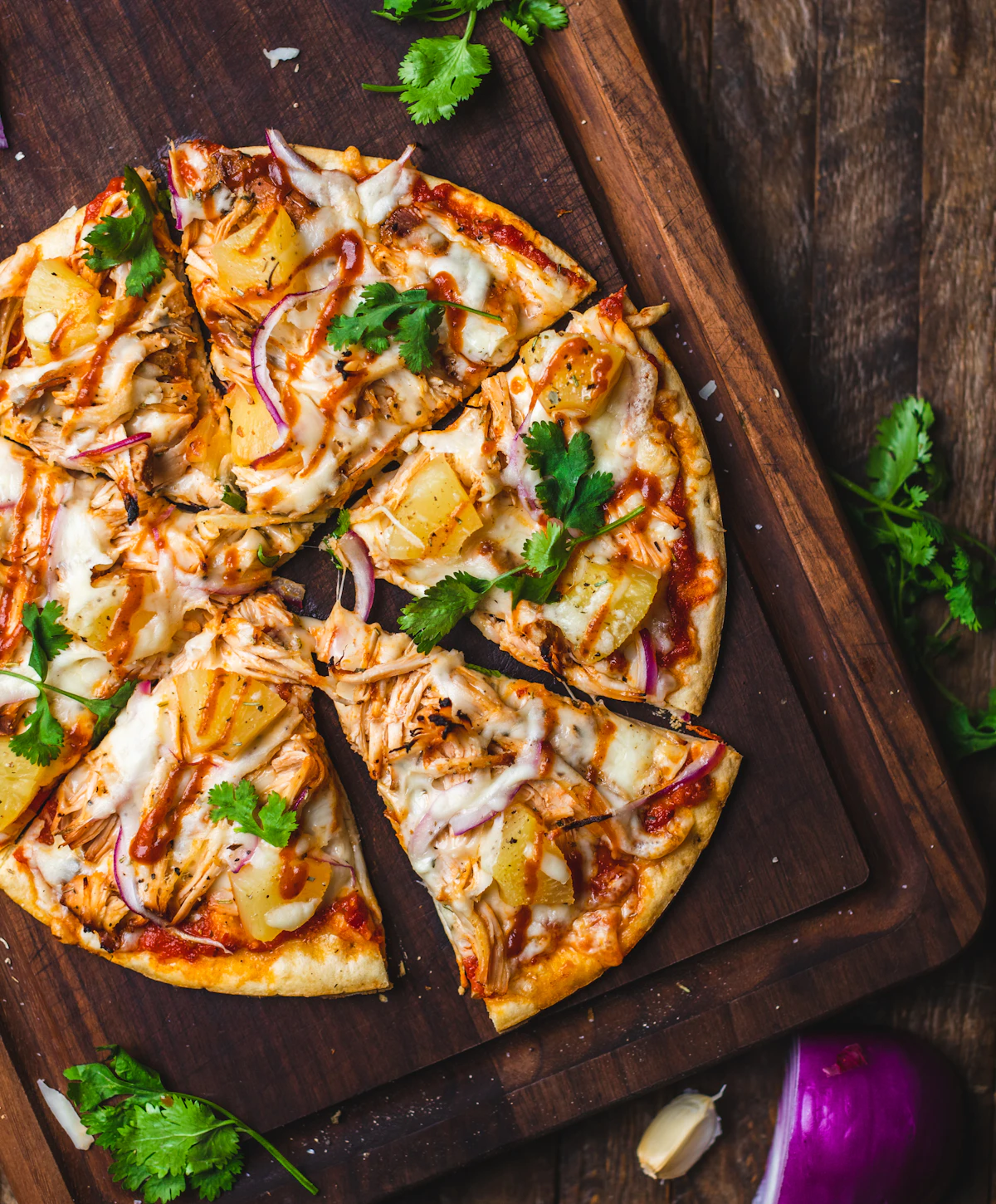

Most catering is a holding business. Food is cooked — often off-site, often hours in advance — then placed in chafing dishes, held at temperature, and served. The chafing dish is the defining technology of conventional catering, and it is the reason most catered food tastes the way it does: warm, soft, and vaguely of itself. We do not use chafing dishes. We cook on-site, to order. This is not a marketing line — it is a cooking decision, and it is the single biggest reason the food at your event will taste different.
Cooked to Order vs. Held Catering
What Chafing Dishes Actually Do to Food
A chafing dish is a holding vessel. It keeps food at a safe serving temperature (usually 140°F+) using a fuel flame underneath. The food sits in the dish, in its own steam, for the duration of service — which can be two, three, or four hours. Over that time, several things happen to the food, none of them good.
First, texture degrades. The crispy skin on a piece of chicken goes soft in the steam. The sear on a steak turns gray. The crust on a piece of fish dissolves. Chafing dishes are humid environments, and humidity is the enemy of every texture that makes cooked food good. Second, flavor flattens. Volatile aromatic compounds — the things that make fresh herbs smell fresh, that make a sear taste like a sear — dissipate over time and in steam. Food held for two hours has measurably less flavor than food served immediately. Third, moisture migrates. Sauces thin, starches absorb, proteins weep. The dish you serve is not the dish the cook made.
The Chafing Dish Reality
Food held in a chafing dish for two hours is not the food the cook made. It is a steam-bath version of that food — softer, flatter, wetter. This is not a judgment of the cook; it is a property of the technology. The only way to serve food that tastes like it was just cooked is to cook it just before serving.
The conventional catering industry knows this. The response is not to change the model — it is to compensate. Sauces are thickened to survive the steam. Seasoning is boosted to cut through the flatness. Proteins are cooked slightly less than ideal, knowing they will continue to cook in the hold. These are workarounds for a fundamentally flawed approach. The better approach is to not hold the food at all.
What Cooked-to-Order Actually Means
When we say "cooked to order," we mean exactly that. The proteins for the taco bar come off the grill and go directly to the serving line — not into a holding pan. The salmon for a plated dinner is seared when the course is called, not pre-seared and held. The chips for the chilaquiles go into the salsa at the moment of plating, not minutes ahead. The omelettes at a brunch are made for each guest, one at a time.
This requires cooking at your event, which means we bring a full cooking setup — grills, griddles, burners — and we cook on-site. This is the core of the operation, and it is the reason the food tastes the way it does. There is no central kitchen where food is prepped and transported. There is no holding step. There is cooking, and there is serving, and the distance between them is measured in minutes.
The Equipment Question
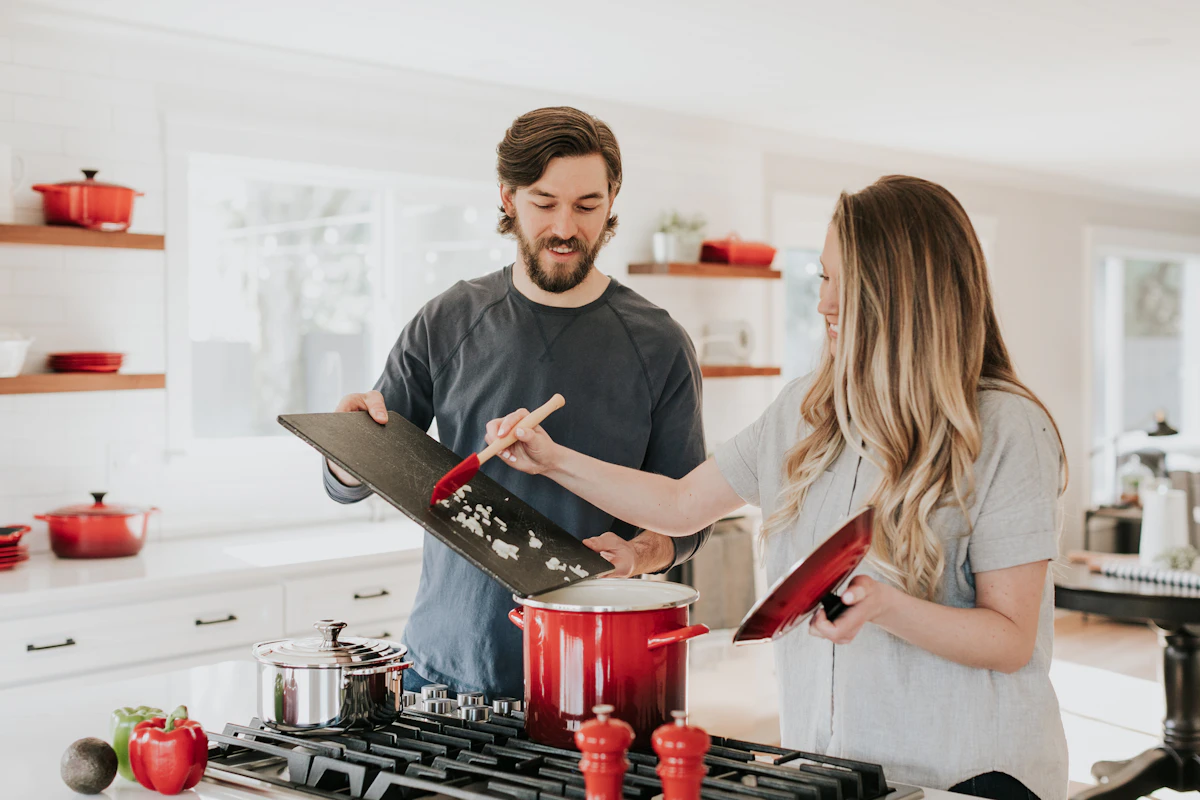
Cooking on-site requires real equipment, not a catering kitchen with Sterno cans. We bring commercial-grade grills, griddles, and burners to every event. This is why the food tastes like restaurant food — because it is cooked on restaurant equipment, at your event, by a cook who cooks for a living. The chafing dish model uses a different, lesser class of equipment, because the equipment does not need to cook — it only needs to hold.
This is also why the taco bar has a 50-guest minimum and private dining has a $1,000 minimum: cooking on-site with real equipment has a fixed cost. Bringing a grill, a griddle, a cooking team, and the infrastructure to cook at your event is a real operation. Below those minimums, the economics do not support it. But above those minimums, the food is dramatically better than held catering, for the same or lower per-person cost.
The Difference You Can Taste
The concrete differences between cooked-to-order and held catering are most obvious in three places:
- The sear. A steak seared on a grill and plated immediately has a crust. A steak seared in a kitchen, transported, and held has a soft, gray exterior. The sear is where the flavor lives, and held catering loses it.
- The salsa. Fresh salsa made the morning of the event is bright, acidic, and alive. Salsa made a day ahead and held is flat. The difference is obvious in the first bite.
- The tortilla. A tortilla warmed to order is pliable and fragrant. A tortilla held in a warmer for two hours is dry and brittle. The taco is only as good as the tortilla, and the tortilla is only good if it is recent.
These are not subtle, "only a chef would notice" differences. They are the difference between food that tastes like it was made for you and food that tastes like it was made for a crowd. The cooked-to-order model produces the first; the chafing dish model produces the second. When you taste the food at a cooked-to-order event, the difference is immediately obvious — and it is the reason people remember the food.
Why Most Caterers Do Not Do This
If cooked-to-order is so much better, why does most catering use chafing dishes? The answer is scale and logistics. The chafing dish model allows a caterer to cook in a central kitchen, load food into pans, transport it, and serve many events with minimal on-site staff. One kitchen can serve dozens of events. The cooked-to-order model requires a cooking team and equipment at every event — it does not scale the same way.
The chafing dish model is more profitable for the caterer because the fixed costs are in the central kitchen, not at each event. The cooked-to-order model is better for the guest because the food is dramatically better, but it requires a caterer who is willing to bring a kitchen to every event. We are that caterer. We have chosen the model that makes better food, not the model that scales more profitably.
How to Tell If a Caterer Cooks to Order
Because "fresh" and "on-site" are used loosely in catering, here are the questions that reveal whether a caterer actually cooks to order:
- Ask if they bring a grill to your event. If yes, they cook on-site. If no, the food is pre-cooked and held.
- Ask if their proteins are cooked at the event or pre-cooked and reheated. The answer tells you everything.
- Ask if they use chafing dishes. This is the direct question. If they say yes, the food is held.
- Ask to see their setup. A cooked-to-order caterer has cooking equipment. A held caterer has serving equipment.
- Taste the food. The test that matters. Cooked-to-order food tastes alive; held food tastes tired.
Our Promise
Our promise is simple: we cook on-site, to order, with no chafing dishes. Every protein is grilled or seared at your event. Every salsa is made fresh. Every tortilla is warmed to order. This is harder work, it requires more equipment and more staff, and it is the reason we have minimums that held caterers do not. It is also the reason the food at your event will taste the way it does — alive, fresh, and cooked for you, not for a crowd.
"Catering is usually a logistics business. I decided to make it a cooking business. The food is the difference."
Want to experience the difference cooked-to-order makes? Book an event or ask about a tasting.